
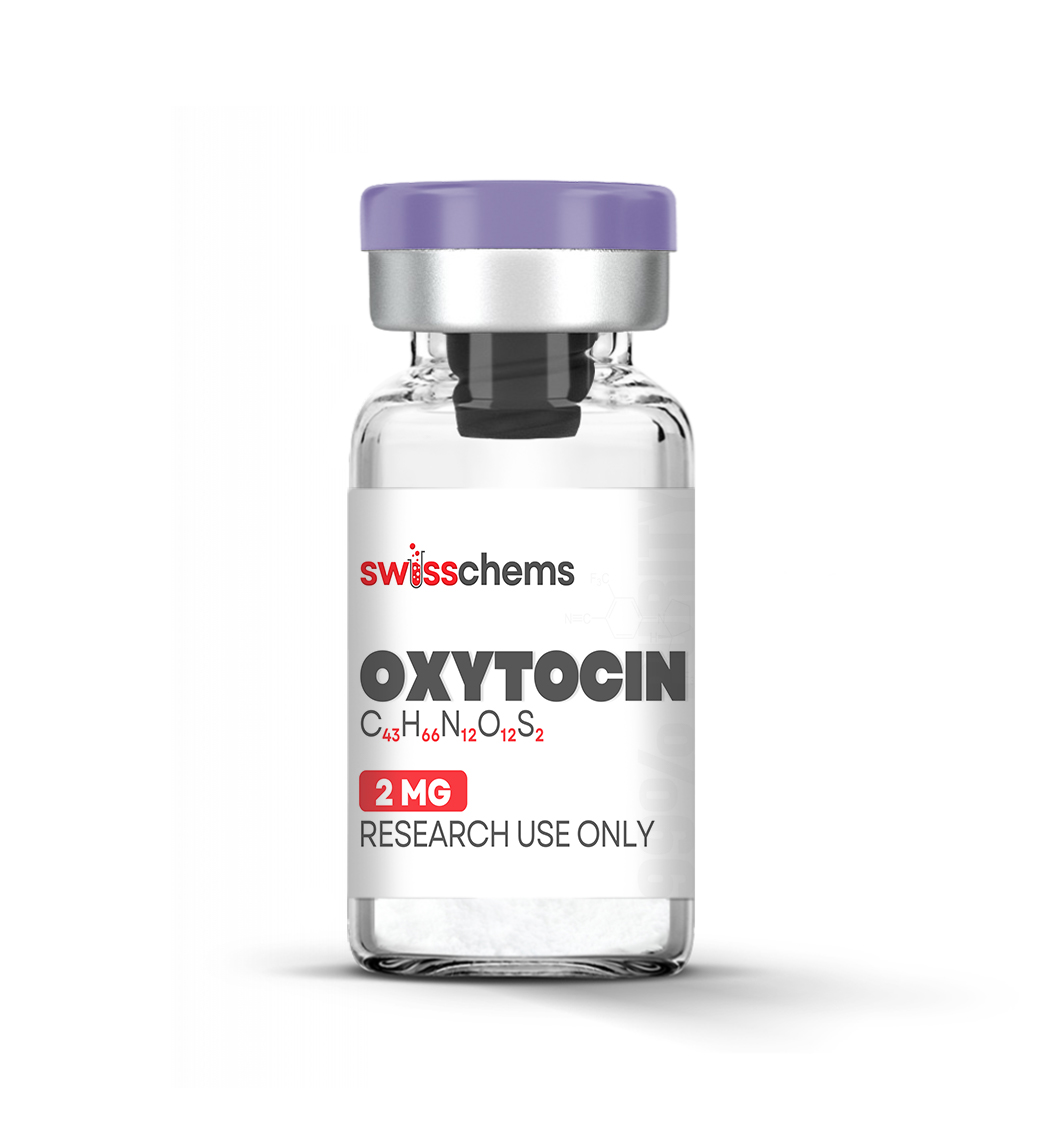
Oxytocin – The Social & Reproductive Peptide Hormone
Oxytocin is a naturally occurring nonapeptide hormone — meaning it consists of nine amino acids — produced mainly by the hypothalamus and released into the bloodstream from the posterior pituitary gland. It functions both as a hormone in the body and as a neurotransmitter in the brain, playing a central role in childbirth, lactation, bonding, and social behaviors.
Often called the “love hormone” or “cuddle peptide”, oxytocin influences physical physiology and emotional regulation, tying together biological systems and interpersonal experience in ways that are still being actively researched.
What Oxytocin Is & How It Works
Oxytocin is synthesized in specialized neurons in the hypothalamus and stored in the posterior pituitary until released into circulation. Peripherally, oxytocin acts on oxytocin receptors (OXTR) — a type of G-protein-coupled receptor — in tissues such as the uterus and mammary glands, where it modulates muscle contraction and secretion.
In the central nervous system, oxytocin acts as a signaling molecule affecting dopamine, serotonin, and stress-related circuits, contributing to emotional, cognitive, and social processing.
One unique aspect of oxytocin’s biology is its dual role:
-
Hormonal action in the bloodstream influencing physical processes like labor and lactation.
-
Neurotransmitter action in the brain affecting social recognition, trust, and emotional memory.
Key Physiological Functions
1. Labor & Childbirth
Oxytocin is most well-known for its role in stimulating uterine contractions during childbirth. When the cervix is stimulated, signals from the nervous system trigger the release of oxytocin, which increases the frequency and strength of contractions in a positive feedback loop, helping progress labor.
Synthetic oxytocin (e.g., Pitocin® or Syntocinon®) is used clinically to induce or augment labor when medically indicated, and to help deliver the placenta or prevent postpartum hemorrhage.
2. Lactation & Milk Ejection
After childbirth, oxytocin triggers the contraction of myoepithelial cells around mammary glands, facilitating milk ejection (“let-down” reflex) during breastfeeding.
Oxytocin & Social Behavior
Beyond reproductive roles, oxytocin profoundly influences social cognition and behavior:
-
Bonding & Attachment: Oxytocin enhances maternal-infant bonding and pair-bonding behaviors in many mammals.
-
Trust & Empathy: Research suggests that oxytocin increases trust in social settings and helps individuals interpret emotional cues such as facial expressions.
-
Social Recognition: Oxytocin plays a part in recognizing familiar faces or individuals — a process crucial for social interaction.
Psychological research indicates that activities like physical touch, group singing, or exercise naturally elevate oxytocin release, reinforcing feelings of connection and wellbeing.
Stress, Mood & Emotional Regulation
Oxytocin interacts with stress-related brain circuits and may help reduce the fight-or-flight response by modulating the hypothalamic-pituitary-adrenal (HPA) axis, potentially lowering cortisol levels and fostering emotional calm.
Longstanding research links oxytocin to emotional processing, reduced anxiety, and general feelings of warmth and comfort in supportive social contexts.
Emerging Research & Broader Effects
Cutting-edge studies are exploring additional roles of oxytocin beyond social and reproductive functions:
-
Cardiovascular protection: Potential cardioprotective mechanisms, including anti-inflammatory actions and improved cardiac recovery, have been observed in preclinical research.
-
Metabolic regulation: Some investigations suggest that oxytocin may influence appetite, energy balance, and metabolic pathways.
-
Neurodevelopment & cognition: Oxytocin’s central effects extend into memory, learning, and social information processing, highlighting its complex neurologic influence.
Clinical Use & Safety
Oxytocin is approved clinically for specific obstetric uses such as labor induction and managing postpartum hemorrhage. It’s administered by healthcare professionals under controlled conditions due to potential side effects like uterine hyperstimulation, changes in blood pressure, or fetal distress if used inappropriately.



Reviews
There are no reviews yet.